
There’s something magical about brewing coffee by hand. The aroma, the steady pour, and that first sip of a perfectly balanced cup — it all feels like a ritual. But if you’ve ever wondered whether pour‑over coffee or French press makes the better brew, you’re not alone.
Both brewing methods have earned loyal fans around the world. Each brings out different notes, textures, and moods in your morning cup. In this guide, we’ll break down everything you need to know about pour over coffee vs French press — from taste and technique to gear recommendations — so you can find which one fits your flavor style.
What Is Pour Over Coffee?
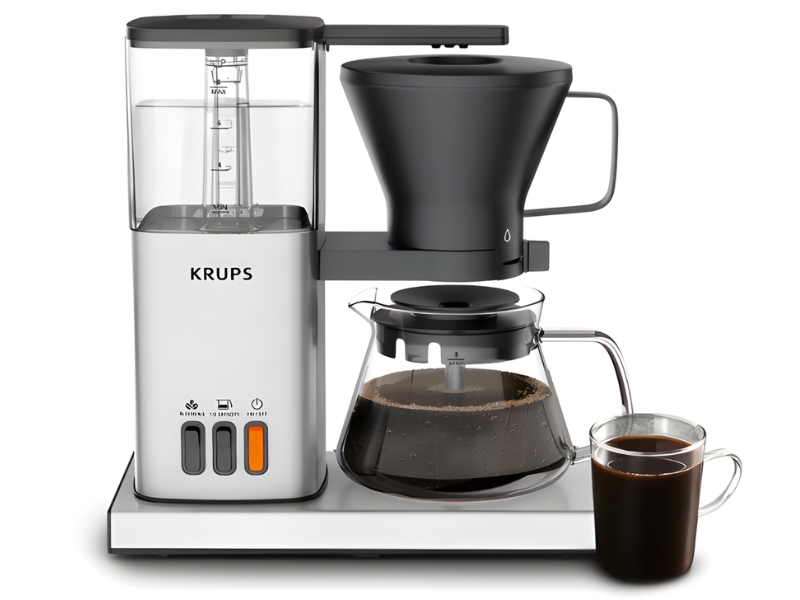
Pour over coffee is a manual brewing method where hot water is poured steadily over ground coffee in a filter. The water slowly moves through the grounds, extracting the perfect balance of flavors before dripping into your mug or carafe below.
You’ll need a pour over dripper (like the Hario V60 or Chemex), a coffee filter, hot water, and freshly ground beans. Unlike automatic machines, you control the pace, temperature, and water flow, making pour‑over brewing both simple and artful.
Fun fact: Pour over coffee dates back to the early 1900s in Germany, and it’s still a staple of the specialty coffee scene today.
What Is a French Press?
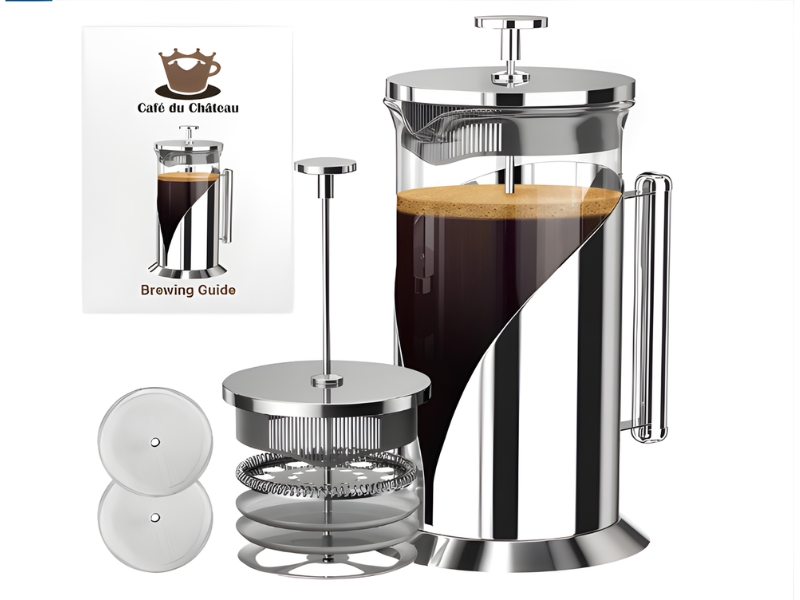
The French press, sometimes referred to as a plunger pot or press pot, works by immersion. Coarse coffee grounds steep in hot water for several minutes, and then a metal mesh plunger separates the grounds from the liquid.
It’s one of the easiest manual brewing tools to use — no filters, no delicate pouring technique — just rich, bold coffee in five minutes or less. If you love full-bodied flavor and low maintenance, the French press might already be your best friend.
Pour Over vs French Press: A Quick Comparison
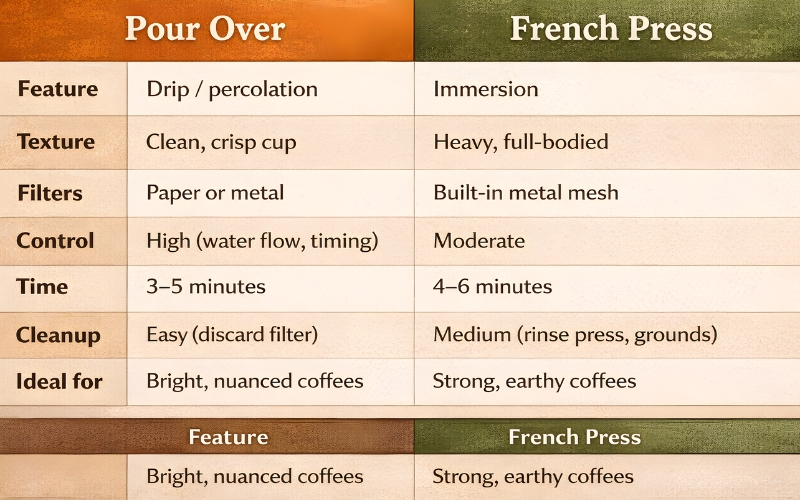
Before going deeper, here’s a snapshot of how these two coffee methods differ:
The Taste Test: Flavor Differences
When it comes to flavor, the difference between pour over and French press is immediately noticeable.
- Pour Over Coffee: Tends to taste lighter, cleaner, and more nuanced. The paper filter catches most oils and sediments, allowing delicate notes — like citrus, berry, or floral tones — to shine through. Perfect if you enjoy exploring the unique profiles of single‑origin beans.
- French Press Coffee: Delivers a fuller, richer, and sometimes oilier cup. Since it uses a metal filter, the natural oils remain, enhancing mouthfeel. It’s an excellent choice for darker roasts and people who love that robust, almost velvety texture.
Think of it this way: pour over is like a crisp white wine, while French press feels more like a smooth red.
Brewing Technique: Ease, Skill, and Time
Both methods are easy once you’ve practiced a few times, but they differ in control and precision.
Pour Over
Pour over gives you precise control over variables like water temperature, pouring pace, and agitation. You’ll need a gooseneck kettle to pour smoothly and evenly, plus some patience to get your timing right.
- Grind: Medium‑fine (like table salt)
- Brew time: Around 3–4 minutes
- Water temperature: 195–205°F
It’s ideal if you enjoy hands‑on brewing and experimenting with flavor extraction.
French Press
The French press, meanwhile, is famously forgiving. Just add coarse grounds, pour hot water, steep for four minutes, and press down slowly.
- Grind: Coarse, breadcrumbs‑like
- Brew time: 4–6 minutes
- Water temperature: 200°F
You won’t need fancy tools — a basic kettle and a timer will do.
Clean Up and Convenience
Cleanup often decides which method you’ll actually use daily.
- Pour over coffee: Cleanup is a breeze. Just toss the used paper filter and rinse the dripper. If you’re using a metal filter, give it a quick wash.
- French press: You’ll need to scoop out wet grounds, rinse the mesh, and occasionally deep clean the plunger to prevent oil buildup.
If you’re short on time before work, pour over might be faster to tidy up. But if you batch‑brew a big mug or two, the French press offers less overall hassle.
Equipment and Cost
Another difference lies in your setup budget.
Pour Over Gear
- Pour over dripper (Hario V60, Kalita Wave, Chemex)
- Paper filters
- Kettle (preferably gooseneck)
- Scale (for accuracy)
- Mug or carafe
You can start with a coffee pour over kit, which typically includes everything you need. Prices range from around $20 for basics to over $50 for premium glass or ceramic sets.
French Press Setup
- French press pot
- Kettle
- Spoon for stirring
No extra filters or gadgets required.
Best Pour Over Coffee Machines and Makers
Manual pour overs are great, but if you want barista-level flavor with button-push simplicity, a pour over coffee machine might be your dream companion.
Here are three Amazon favorites worth checking out:
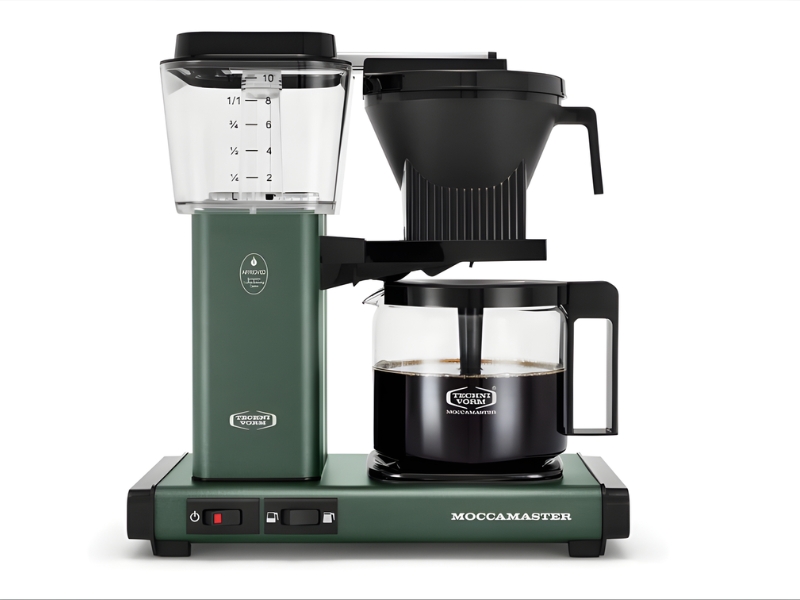
- Technivorm Moccamaster 59616 KBG This machine perfectly simulates the manual pour over process, with consistent temperature control and even saturation. It’s SCA-certified, meaning it meets strict specialty coffee standards.
- OXO Brew 9-Cup Coffee Maker Sleek, easy to use, and great for beginners. It pours water in precise cycles to mimic a manual pour.
- Ninja Specialty Coffee Maker Ideal for those who want options — you can brew classic pour over or iced coffee. Plus, it has a built-in milk frother for latte lovers.
When comparing pour over vs drip coffee, these machines blur the line by delivering that clean pour over taste using automated drip technology. They’re perfect if you want control and convenience combined.
Best Pour Over Coffee Makers (Manual)
If you prefer sticking to the traditional hand-pour ritual, these standout manual pour over coffee makers deserve a spot on your counter:
- Hario V60 Ceramic Dripper A classic Japanese design.
- Chemex Classic 6-Cup Glass Coffeemaker Iconic and elegant. Its thick paper filters create an ultra-clean brew, making it perfect for those who enjoy fruity single origins.
- Kalita Wave 185 Stainless-Steel Dripper Its flat-bottom design ensures even extraction without fuss. Perfect for beginners still perfecting pour speed.
- Bodum Pour Over Coffee Maker with Permanent Filter A smart pick if you want to skip paper filters. It comes with a reusable stainless-steel mesh filter that preserves natural oils for a slight French-press vibe.
Coffee Beans: Choosing the Right Roast
Your beans can make or break the experience.
- For Pour Over: Go for medium or light roasts. These emphasize brightness, acidity, and layered flavor — think Ethiopian or Colombian origins.
- For French Press: Dark and medium roasts shine here. They yield bold body and lower acidity, like Sumatran or Brazilian beans.
Always buy whole beans and grind them up right before you brew. For pour over, aim for a medium grind; for French press, much coarser.
Pour Over vs Drip Coffee: What’s Different?
Many people confuse pour over and drip coffee, since both involve water passing through grounds and a filter. The difference is control.
- In drip coffee machines, the water flow and temperature are automated. It’s convenient but less customizable.
- In pour over brewing, you control every step — how fast you pour, how evenly water saturates, and how long it brews.
That manual process creates a more refined, tailored flavor profile that’s hard to replicate with standard drip machines.
Why Coffee Enthusiasts Love Pour Over
Pour over brewing is popular among coffee shops and home enthusiasts for a reason:
- Precision: You influence each variable.
- Flavor clarity: Highlights subtle bean characteristics.
- Aroma: The aromas are more pronounced during brewing.
- Mindful process: It’s meditative — a perfect morning ritual.
If you love trying new beans and tasting their unique notes, the pour over is your playground.
Why French Press Fans Stay Loyal
The French press might not win every “specialty coffee” competition, but it has devoted fans for its simplicity and strength.
- No filters required: Eco‑friendly and less waste.
- Thicker mouthfeel: Perfect for those who prefer a hearty cup.
- Durability: Ideal for camping or travel.
- Low effort: Set, steep, plunge — done.
You can even make cold brew in the same press by steeping coarse grounds in cold water overnight.
Which One Should You Choose?
If you’re still torn between pour over coffee vs French press, here’s how to decide:
- Choose Pour Over if: You want cleaner flavors, lighter texture, and a mindful brewing process. Great for single‑origin beans and mornings when you want to slow down.
A lot of coffee lovers end up with both: a pour over for weekdays and a French press for weekends. Each method has its own mood.
Tips for Better Coffee, No Matter the Method
- Use filtered water. Tap water can add unwanted minerals or chlorine taste.
- Measure with a scale. For pour over, the coffee-to-water ratio should be 1:15, and for French press, it should be 1:12.
- Mind your grind. Finer grinds over‑extract and turn bitter; coarse grinds under‑extract and taste weak.
- Keep it fresh.
These tips apply universally — once you master them, every cup improves instantly.
Essential Accessories for Both Methods
If you’re getting serious about home brewing, consider a few gadgets to elevate your setup:
- Burr grinder: Ensures an even grind size (try Baratza or OXO).
- Electric gooseneck kettle: Offers precision control for pour overs.
- Digital scale: Guarantees accurate coffee–water ratios.
- Coffee pour over kit: A budget-friendly way to start experimenting.
Little investments like these make a big difference in flavor consistency.
Pour Over Coffee vs French Press: The Sustainability Angle
Both methods can be eco-friendly when used right.
- Pour Over: Choose reusable metal filters or compost paper filters to reduce waste.
- French Press: No filters needed at all, and coffee grounds can be composted easily.
In terms of energy, both require minimal power — just heated water — making them greener than electric drip machines or capsules.
Common Mistakes and How to Fix Them
Even seasoned brewers slip up sometimes. Here are a few quick fixes:
- Bitter coffee (both methods): Water too hot or brew time too long.
- Weak coffee (French press): Grounds too coarse or short steeping time.
- Sour coffee (pour over): Under-extracted; slow your pour or grind finer.
- Muddy cup (French press): Old grounds or worn-out filter screen.
Remember — it’s all about playing with timing, grind size, and water flow until you hit your perfect balance.
How to Transition from One Method to Another
If you’ve been using a French press and want to try pour over, expect lighter, subtler taste notes at first. Likewise, moving from pour over to French press might feel heavier or oilier.
The best approach? Use the same beans in both methods once to compare how each extracts flavor differently. It’s a fun and educational experiment for your palate.
Final Thoughts: Let Your Taste Decide
In the end, the pour over coffee vs French press debate has no single winner. It’s more about your taste, schedule, and mood. Pour over coffee gives you delicate, balanced clarity, while the French press delivers bold comfort in a cup.
Whether you go for a coffee pour over kit or a sturdy French press, what matters most is the joy of slowing down and savoring each sip. After all, every great day starts with a cup brewed your way.
Recommended Gear on Amazon:
- Hario V60 Ceramic Dripper
- Chemex 6-Cup Glass Coffeemaker
- Bodum Chambord French Press
- Technivorm Moccamaster Coffee Maker
- OXO Brew Gooseneck Kettle
- Complete Coffee Pour Over Kit
(Note: As an Amazon Associate, I earn from qualifying purchases — at no extra cost to you.
If you’re a true coffee enthusiast, we’ve got you covered with our expert guides. Discover the perfect brew by exploring our popular post: The Best Espresso Machines for Coffee Lovers, where we break down top picks for every skill level. For café owners or anyone seeking high-quality, budget-friendly options, don’t miss our guide on the Affordable Commercial Automatic Espresso Machine, packed with practical tips and buying advice. Still deciding how to brew your perfect cup? Check out our comparison: Pour Over Coffee vs French Press: Which Brew Method Suits You Best?, to find the method that suits your taste. Each of these guides is designed to help you make smarter coffee decisions with confidence.